
Flying Under The Radar
Flying Under The Radar presents ten collages made from scans of vintage marbled papers combined with original colored pencil drawings of moths. Most of these pieces are on 12x12 inch birch panel. I started this series as a compositional study because I enjoyed the aesthetic of moths on marbled papers, but I soon realized the act of making these collages was a meditation.
Moths hide extremely well on marbled paper, and as much as they hide they also occasionally emerge. This made me think about all the ways we hide these days. Some of us hide from real danger, while others hide from their fears, or from self awareness.
As a socially anxious introvert I tend to hide more than is good for me, but sometimes I will suddenly emerge with a pop! These little bursts of courage don't last long, but they resemble the quick flight of a moth catching the light.
Here I present each piece in the Flying Under The Radar series along with a short description and a meditation for you about hiding. I invite you to explore all the ways you hide psychologically and physically, and if you find that helpful or harmful.
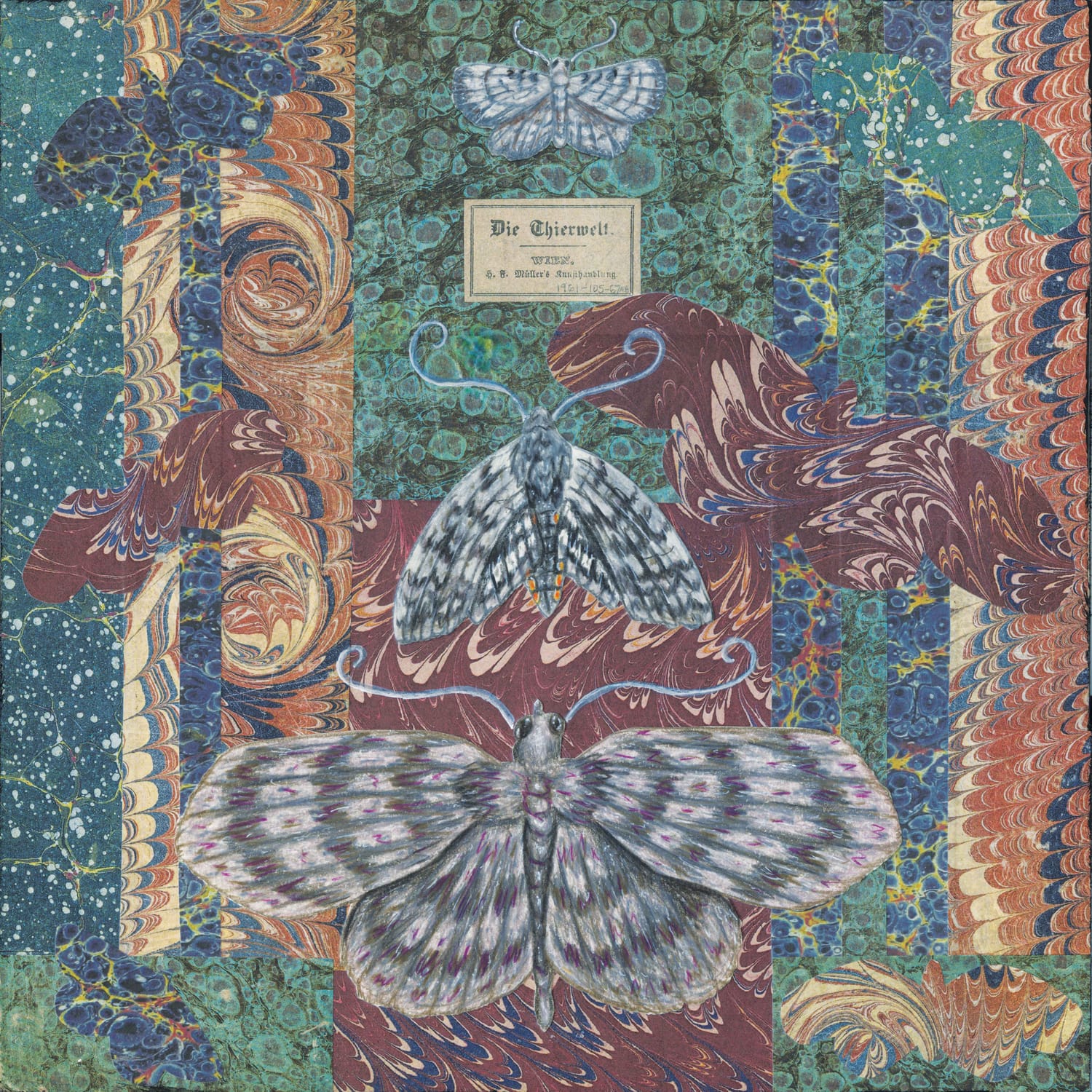
Recognition - collage and colored pencil on birch panel, 12x12 inches
Three moths want to be included in the animal kingdom. They have become accustomed to being invisible, camouflaged by their gray like old ladies. While this camouflage is protective, it is becoming unbearable. The moths are tired of hiding, they want to be seen, counted, recognized. They didn’t spend billions of years evolving to be ignored.
Meditation: Do you feel invisible in any area of your life? Can you overcome this or use it to your advantage?
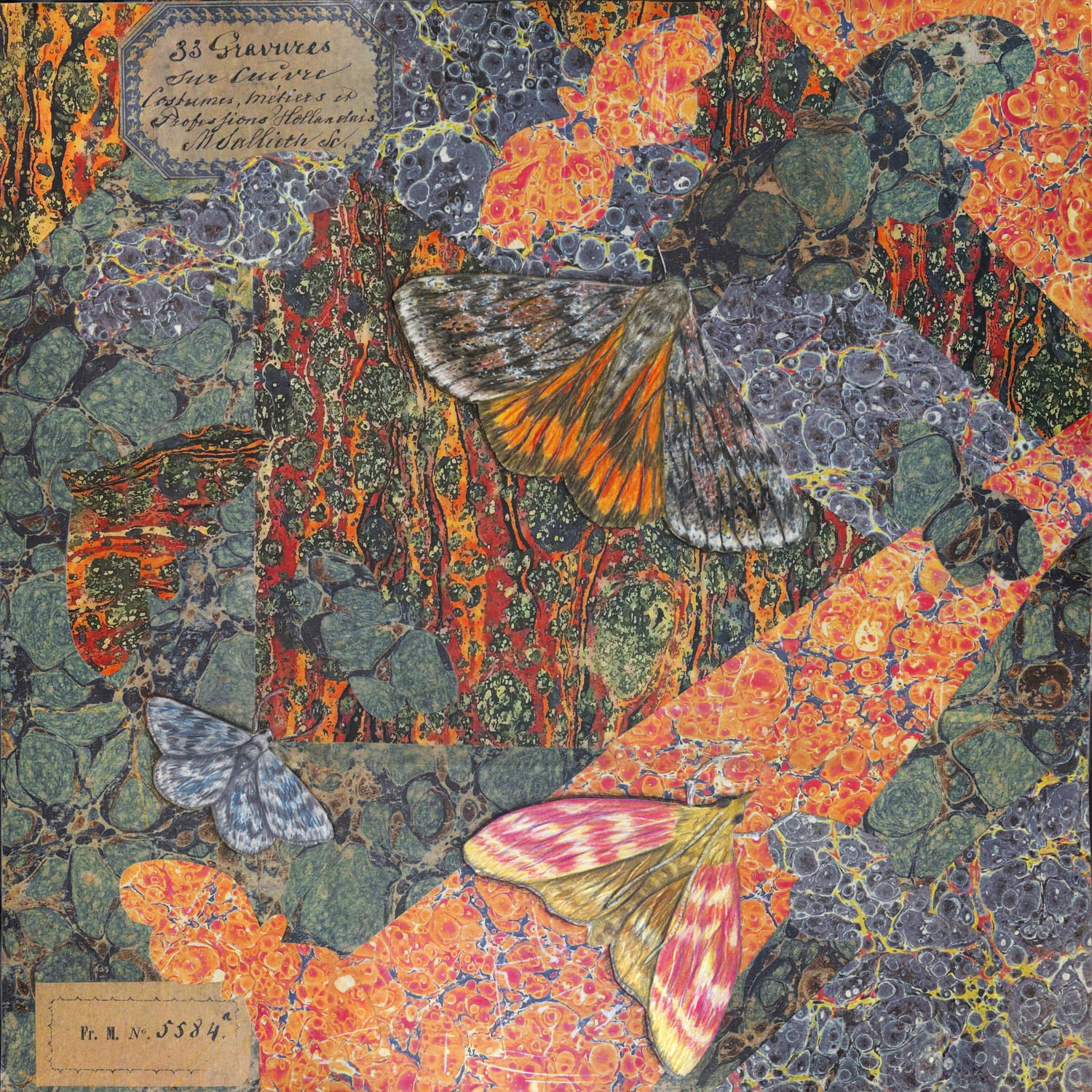
Bark and Beams - collage and colored pencil on birch panel, 12x12 inches
Some of the more visible moths still evolved to hide. The Primrose Moth dons pink and gold to look like her lover, the evening primrose. They rendezvous at dusk, the flower’s nectar beaming the moth up to heaven. The orange underwing likes to hide against birch bark, very good at being invisible, until scared. Then his secret orange wings flash, startling bats who forget how to hunt in that moment.
Meditation: How do you dress up to fit in? Do you enjoy dressing up or feel resentful about it? How can you alter your dress up to reflect your unique personality?
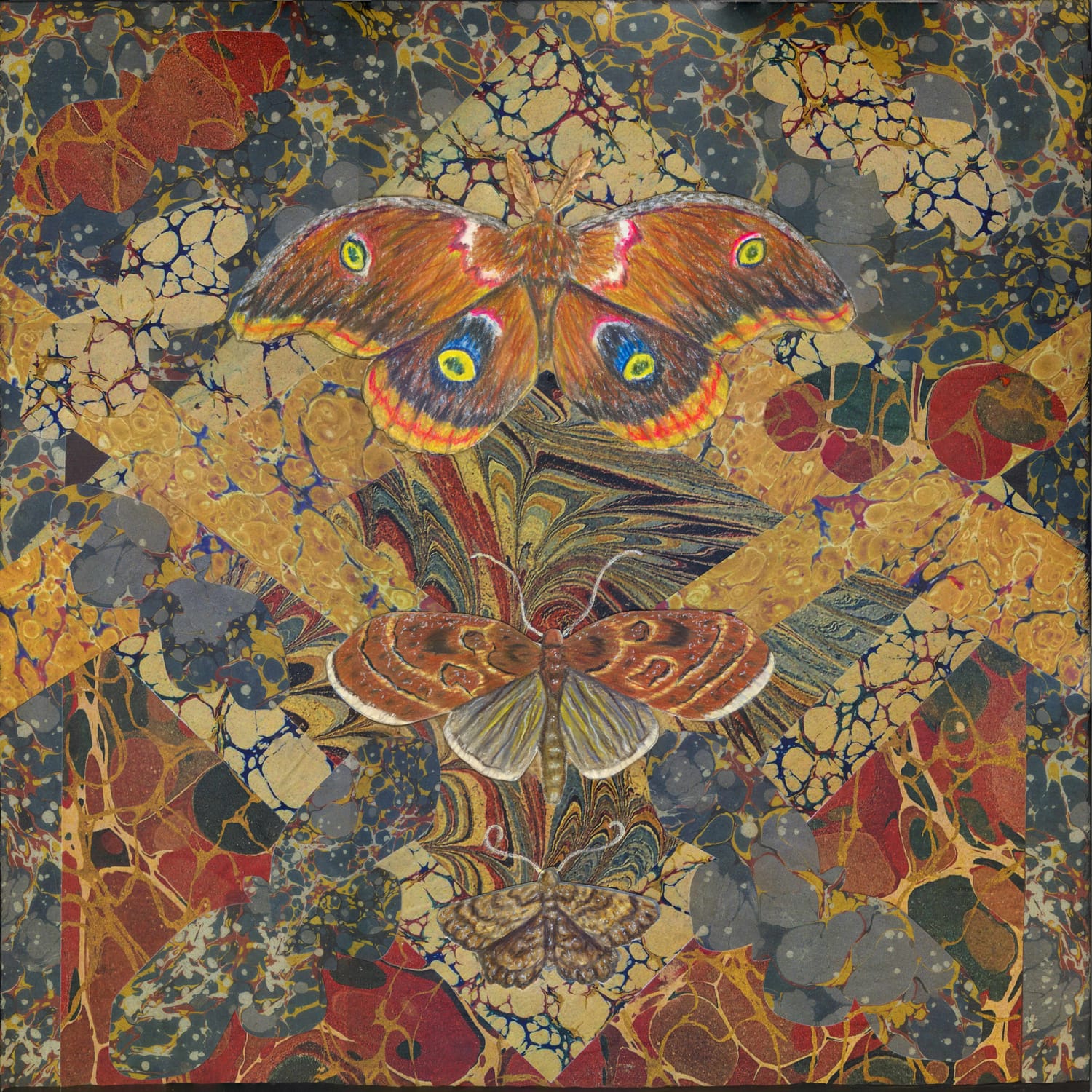
Endpapers - collage and colored pencil on birch bark panel, 12x12 inches
Polyphemus, that great cyclops, turns his eye to a book. The insight of this anonymous author impales the mighty eye, which splits into four! Upon finishing the book, Polyphemus takes on disciples, but the message he shares of love and resistance makes them hunted by the government. All the moths go into hiding with their wisdom and message of compassion and equality. While the book is shared, it must remain hidden, its message shared only in twilight language.
Meditation: Do you ever hide your message behind cryptic language? Why? How can you be more coherent?
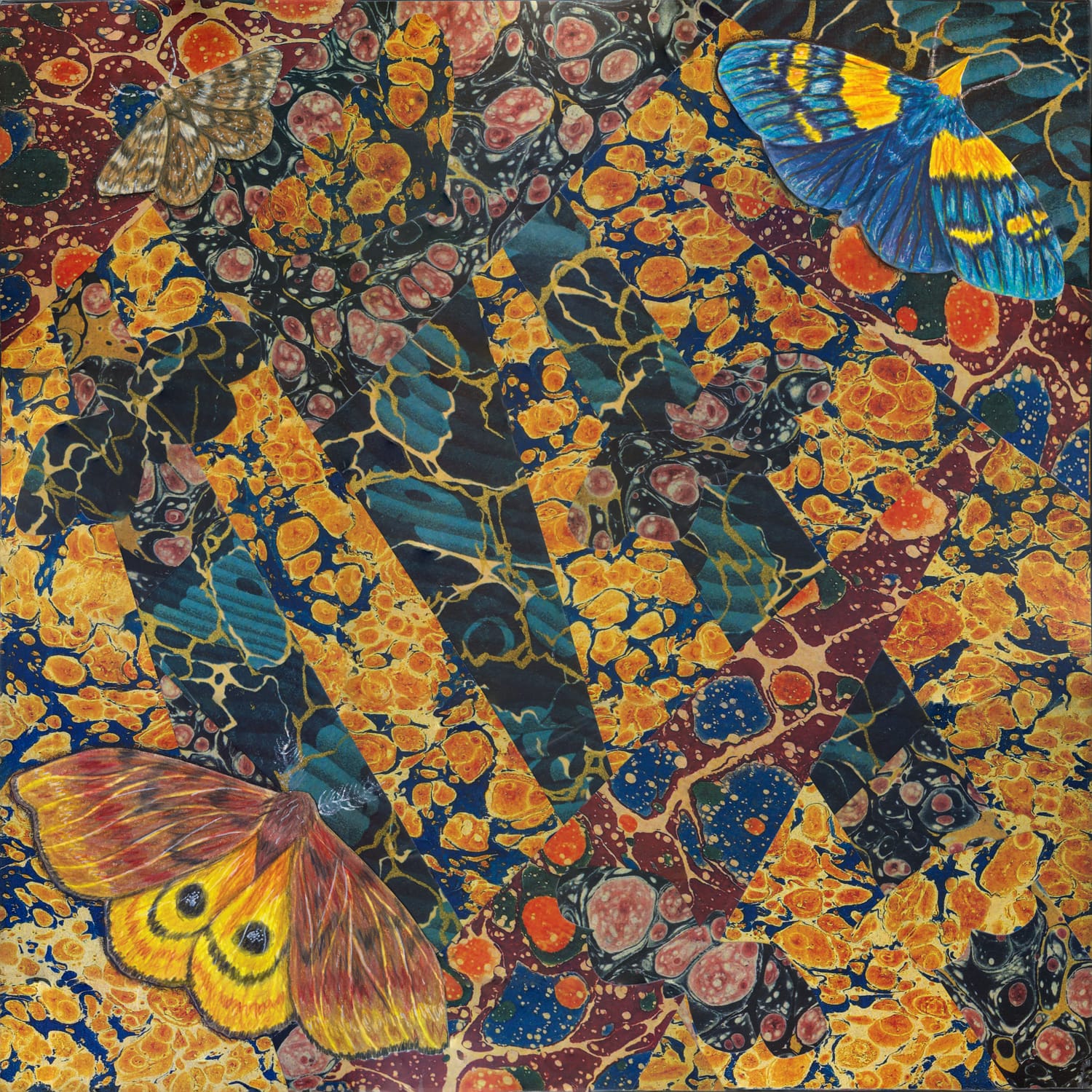
Jungle Light - collage and colored pencil on birch panel, 12x12 inches
The Io and African Peach Moth are two you would never see together. Not only do they live in completely different climates, but are active at different times of the day. Io is a night moth while African Peach is a day moth. Here they somehow hold the same space, hiding in the dappled light of the jungle. Even if they could both inhabit such a world they still would never see each other. In such a way our brains compartmentalize difficult emotions, keeping them separate from the state of mind required to work. While playing hide and seek with our own brain is a survival mechanism, it's important to allow yourself time to process the difficult emotions we hide away.
Meditation: Do you compartmentalize your emotions? How does this help and how might it harm you? Do you allow yourself enough time to process your emotions?
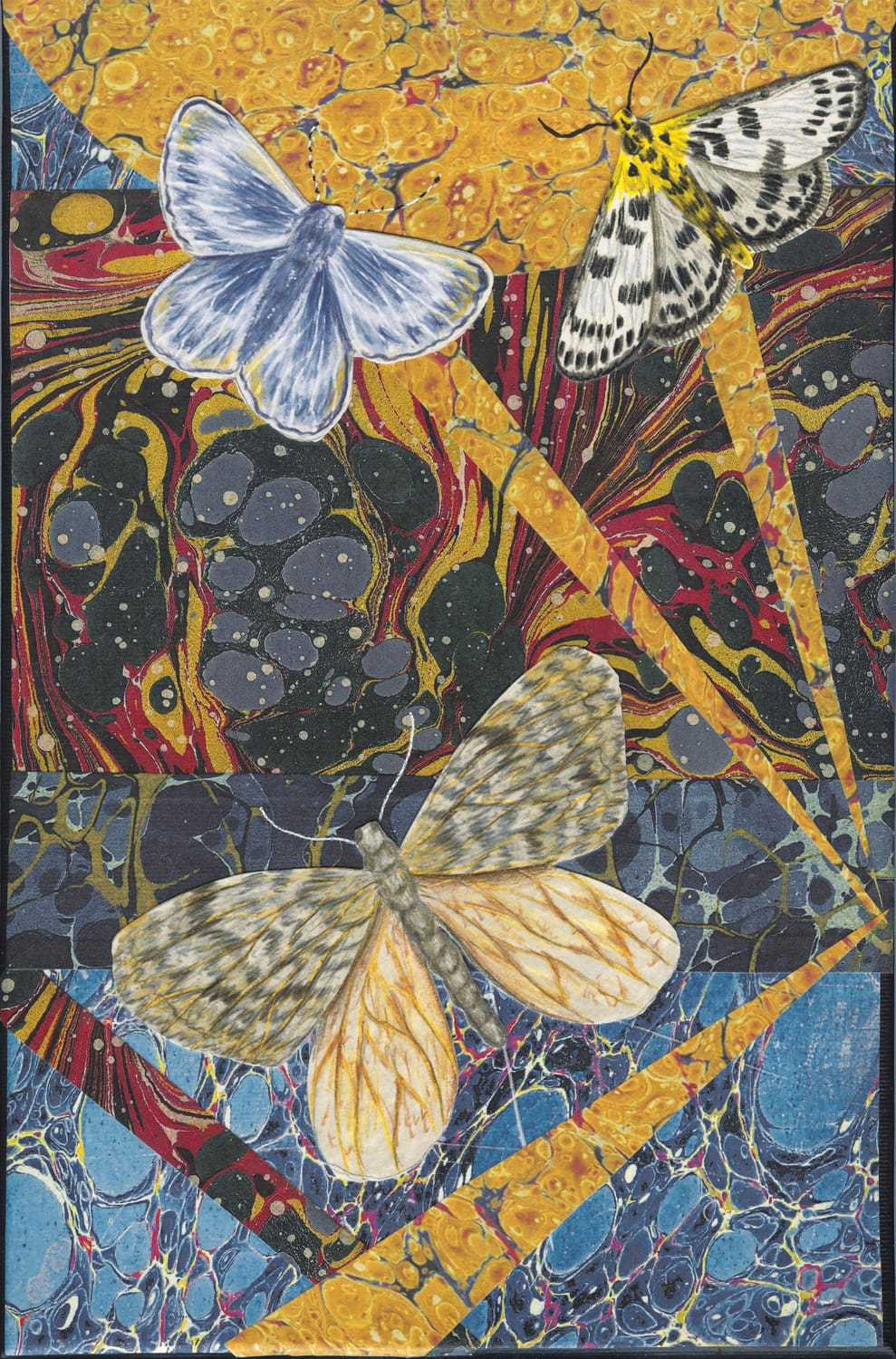
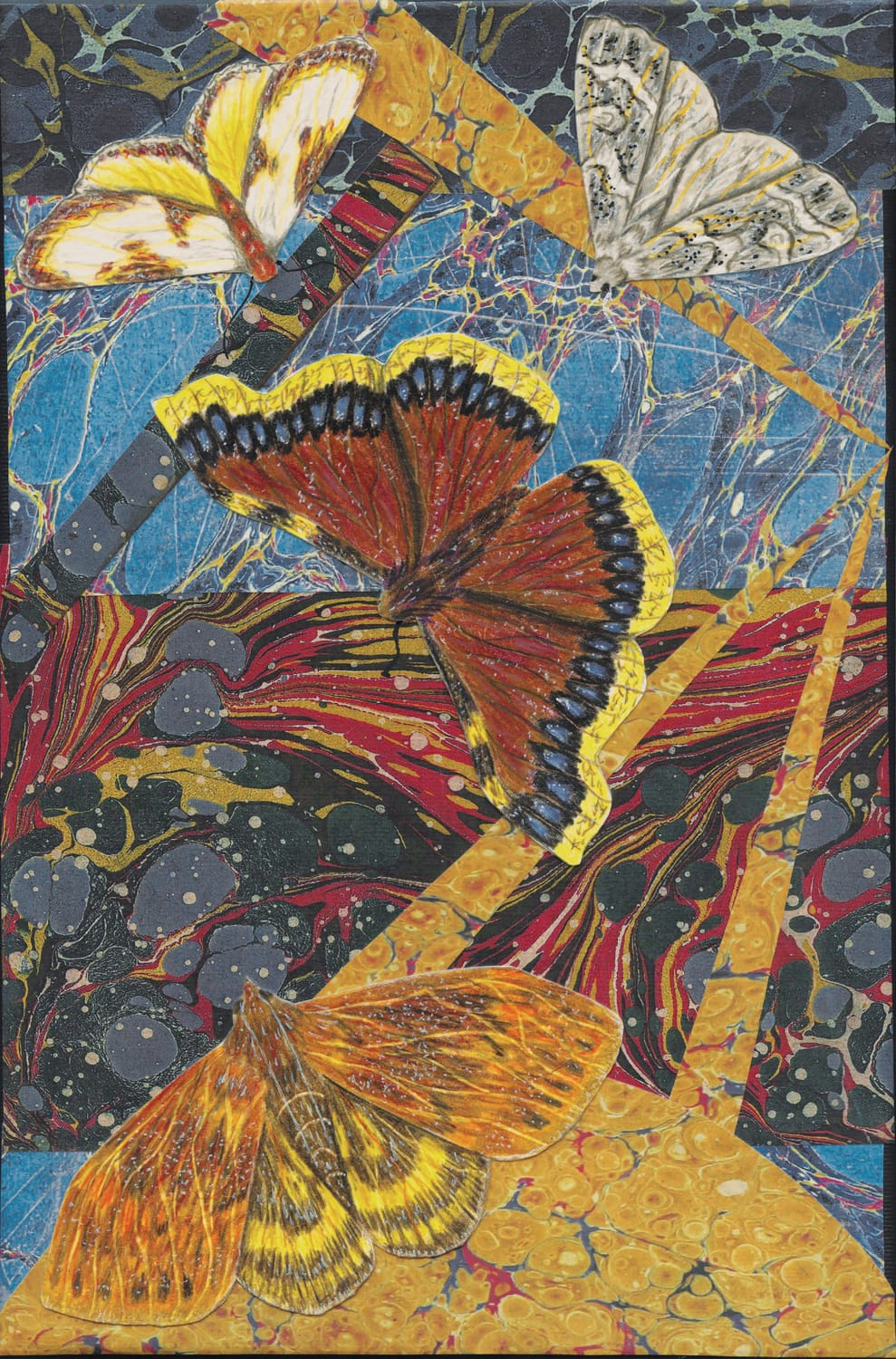
Between Suns - collage and colored pencil on canvas, two canvases each measuring 8.75x11.75 inches
There are quite a lot of moths fluttering between these two prints. We have a Melissa moth, a Mourning Cloak butterfly, a Beautiful Wood Nymph, an Orange Mint, a Small Magpie, and more. They fly between two competing suns, having to make a decision which light to follow. At least the Orange Mint blends right in with his chosen light. He is a symbol of hiding inside one’s intellect. We are not our minds, as tempting as it is to think so. These moths fly between identities, not willing to embrace their uniqueness, preferring to hide in cloaks of knowledge that will help them fit in with their chosen company.
Meditation: How do you use your intellect to try to fit in? Do you feel people overvalue or undervalue your knowledge? What do you want people to know you for?
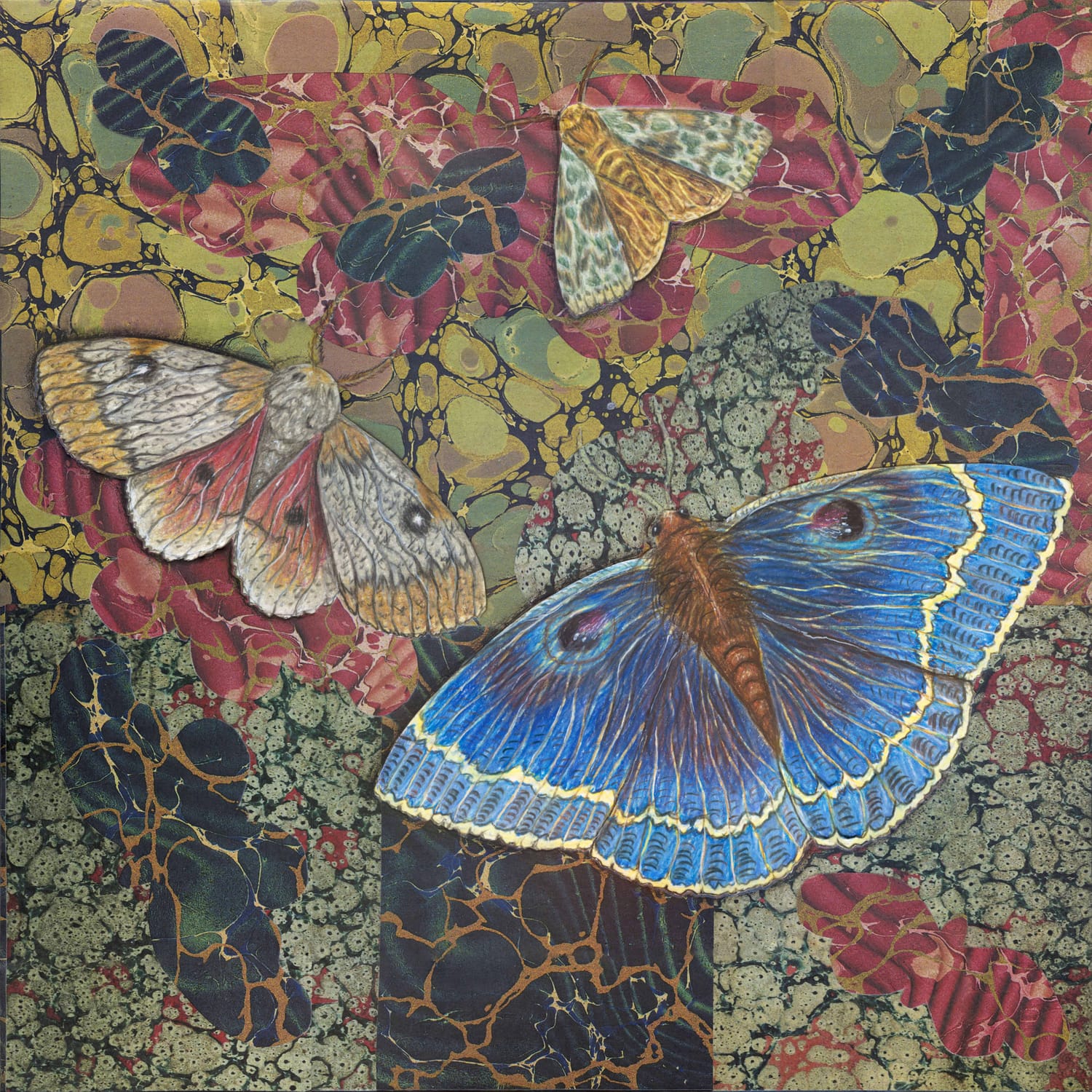
Blue Owl - collage and colored pencil on birch panel, 12x12 inches
Tis a shame I can’t always remember which moths I drew. At least I know the big blue one is a Himalayan Blue Owl moth. Many moths have deceptive eyes on their wings. This is a form of hiding out as a creature they are not. If a predator can mistake them for an owl, then they won’t be messed with. Here the Himalayan Blue seems to be protecting his smaller and more invisible friends with his all seeing deceptive eyes.
Meditation: How might you be hiding behind a more threatening or more confident exterior? Do you find this helpful? Exhausting? Does this form of hiding help others too?
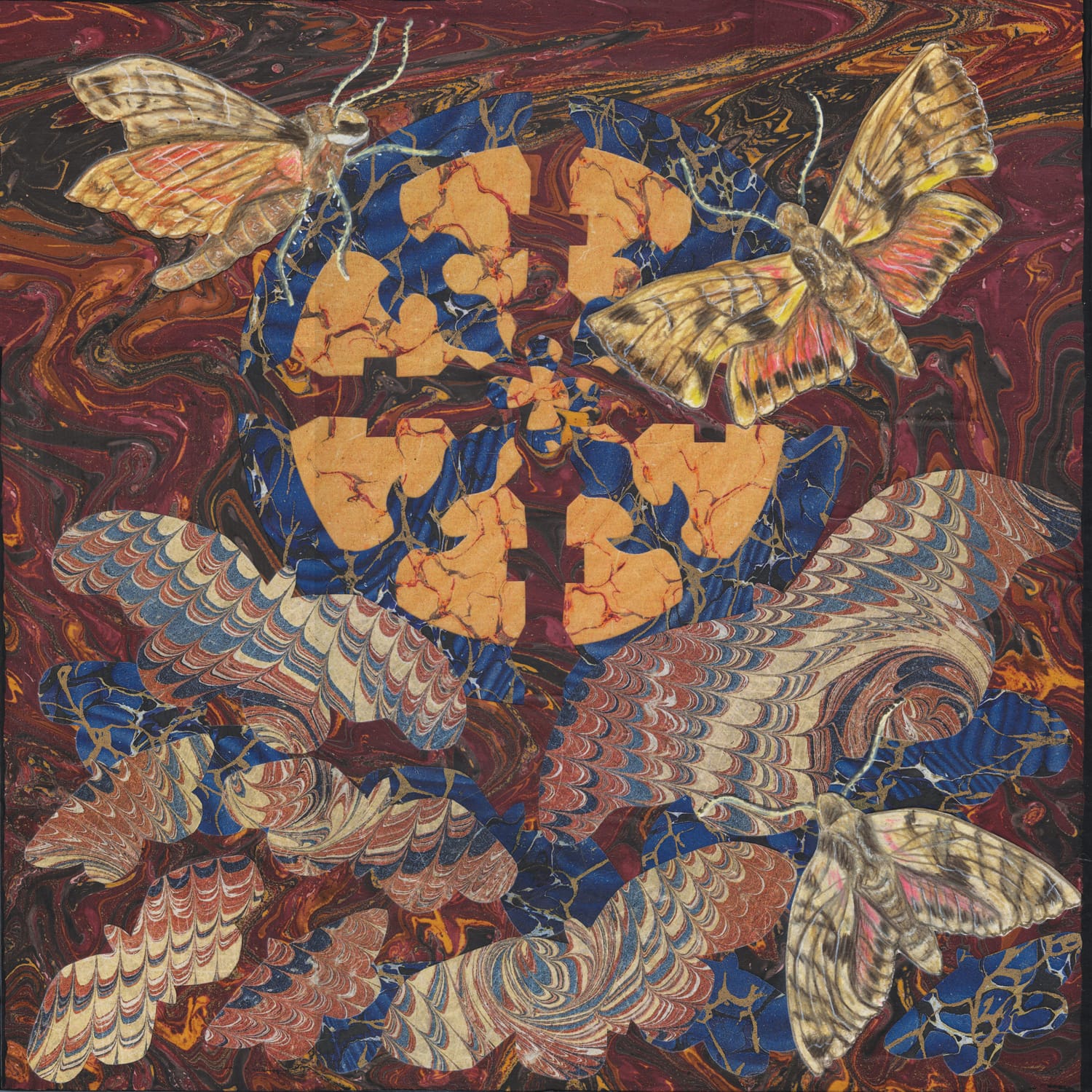
Light of Learning - collage and colored pencil on birch panel, 12x12 inches
A tidal swell of pink moths flutter toward enlightenment, but only three will make it. What they learned defined them, made them see who they really are, both as similar to and different from the rest. They are achemon sphinx moths, stalkers of vineyards, fueling themselves on the grapes of knowledge for the strength to fly off and pollinate rare orchids. Misunderstood, they hide what they know, because who would believe them?
Meditation: Have you had any experiences you simply don't talk about because you don't think anyone would believe you or understand? How does that make you feel? Who can you talk to about these things? Where can you find people who might understand?
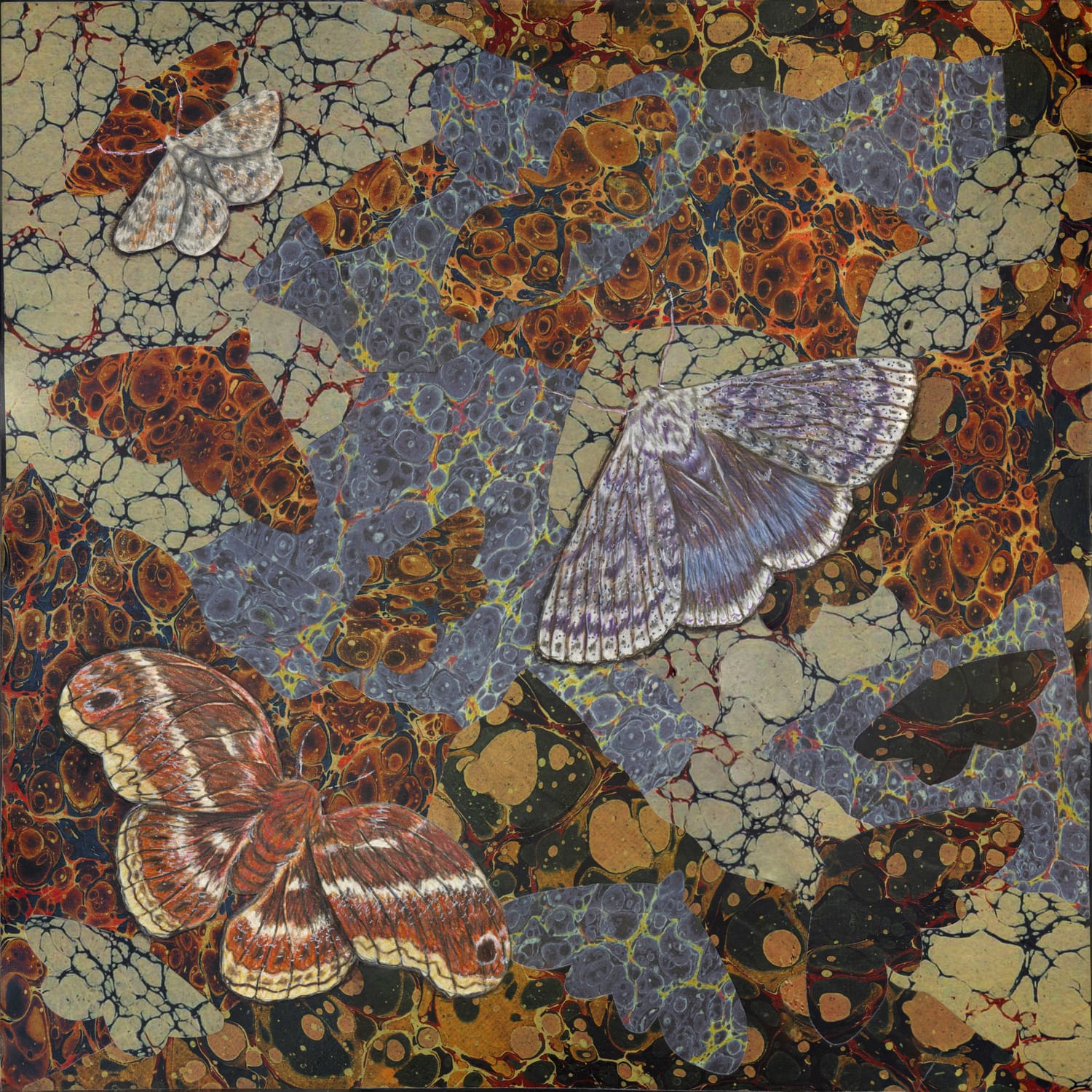
Beyond Compare - collage and colored pencil on birch panel, 12x12 inches
A Promethea Moth and a Clifden Nonpareil fly together over a shifting topological landscape along with a little guy in the corner. The Clifden Nonpareil’s name means “beyond compare,” and it was considered extinct in the 1960s. A British moth, also known as the Blue Underwing, it is absolutely huge, and has recently made an astounding comeback, sometimes even seen flying inland from over the sea.
Promethea is a giant silk moth from the Eastern United States. When the Promethea caterpillar builds its cocoon, it stays inside all winter long, which is quite a bit longer than most moths. The females and the males are active at different times of day, finding mates only around dusk. The males imitate a poisonous butterfly for survival because he’s active during the day. The female is brown in order to hide among dead leaves at night because she spends more time laying eggs than flying around.
Meditation: How long do you hide in your cocoon, and how long would you like to? Would you enjoy playing dead while plotting a magnificent comeback? How might different genders hide differently? How do you hide in a gender specific way?
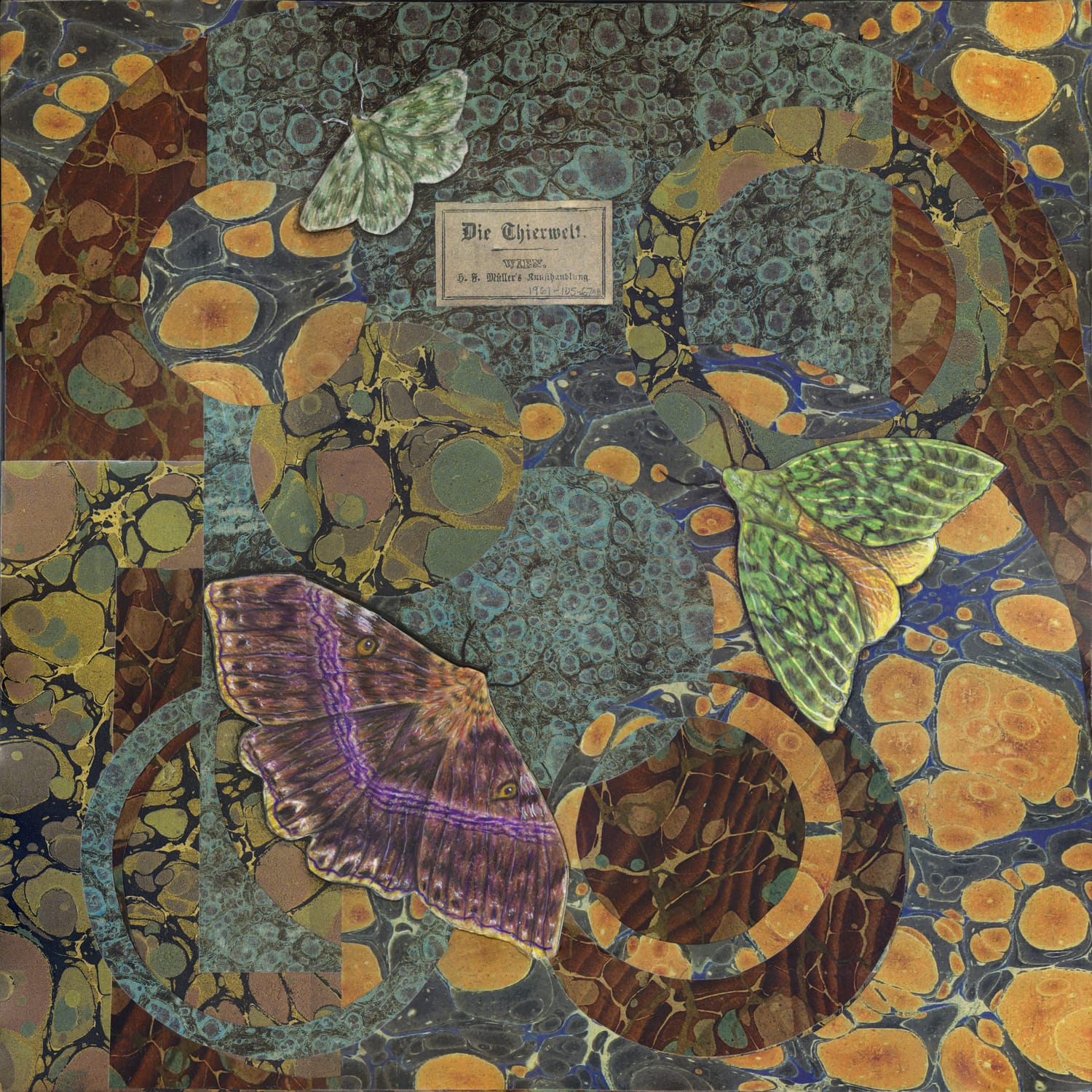
Planetary Migration - collage and colored pencil on birch panel, 12x12 inches
The Black Witch moth - with the purple stripe - is the largest moth north of Mexico, often seen as harbingers of bad luck or death, but also of good luck in money. They also migrate some insanely large distances, crossing oceans, and easily flying across the Gulf of Mexico. Why do they do it? One theory is that establishing territory in far flung places will help a species survive climate change. Here, the Black Witch flies among orbs and rings, as if winging her way through space, searching to establish a new animal kingdom far away from an increasingly uninhabitable earth. Looks like she’s bringing friends too. Is the search for other inhabitable planets a form of hiding? Instead of working together to solve the issues of climate change here on earth, we look for far flung and impractical solutions.
Meditation: How do you go out of your way to avoid aspects of yourself that you don't like? On a smaller level, how might you hide from doing the hard work of self improvement by doing superficial things like moving or changing your hair? In what ways do those small things help? In what ways do they fall short?
© Created with systeme.io